

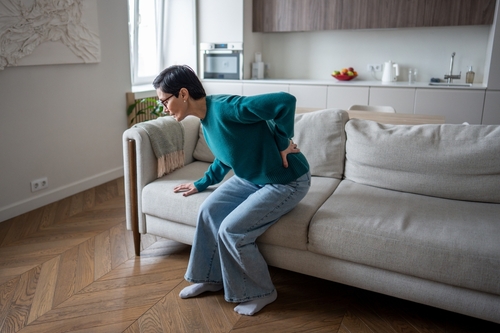
Herniated Disc Treatment in Maineville and Mason OH
A herniated disc does not always feel like one sharp spot in the back. Some people feel mostly low back pain. Others notice pain, tingling, or numbness traveling into a leg. A disc problem in the neck can send symptoms into the shoulder, arm, or hand.
Patients looking for herniated disc treatment in Maineville OH or herniated disc treatment in Mason OH often want to know two things: how serious is it, and does it automatically mean surgery?
In many cases, the answer to the second question is no. Most herniated discs are initially managed with conservative care, although the right treatment depends on the symptoms, neurological findings, and severity of the problem.
At Elite Chiropractic, we start with the symptoms and the examination rather than assuming every MRI finding is the cause of pain. Many of our patients live in Maineville and Mason, with others visiting from Landen, Kings Mills, Lebanon, Loveland, and nearby communities.
What Is a Herniated Disc?
Your spine contains discs between the vertebrae. These discs act as cushions and allow the spine to bend, twist, and absorb forces during movement.
A herniated disc occurs when part of the softer material inside a spinal disc pushes through or presses against the tougher outer portion of the disc.
The Cleveland Clinic explains that a herniated disc may irritate nearby spinal nerves and cause pain, numbness, tingling, or muscle weakness.
Bulging Disc vs. Herniated Disc
People often use the terms “bulging disc,” “slipped disc,” and “herniated disc” interchangeably. Imaging reports may use different terms depending on the shape and extent of disc displacement.
The important question is not simply what word appears on the MRI. It is whether the disc finding matches your symptoms and examination.
Some people have disc changes on imaging without significant pain. Others have a relatively small disc problem that irritates a nerve and causes substantial symptoms.
Where Herniated Discs Usually Occur
Herniated discs can occur anywhere in the spine, but they are most common in the lower back and neck.
Lumbar Herniated Disc
A disc problem in the lower back may cause:
- Low back pain
- Pain traveling into the buttock or leg
- Sciatica
- Tingling or numbness in the leg or foot
- Leg weakness
- Pain that changes with sitting, bending, lifting, or coughing
Cervical Herniated Disc
A disc problem in the neck may cause:
- Neck pain
- Shoulder-blade pain
- Pain traveling into the arm
- Hand or finger tingling
- Numbness
- Arm or grip weakness
- Pain that changes when turning or bending the neck
Why a Herniated Disc Can Cause Sciatica
A lumbar disc can irritate one of the nerve roots that contributes to the sciatic nerve. When that happens, symptoms may travel from the lower back into the buttock, thigh, calf, or foot.
The leg symptoms may actually feel worse than the back pain.
Some patients describe sharp pain. Others notice burning, tingling, numbness, or an electric sensation.
If leg pain is your main complaint, our guide to sciatica treatment in Mason OH explains this pattern in more detail.
What Causes a Herniated Disc?
Disc problems do not always happen during one dramatic event. Many develop gradually as discs change with age and repeated stress.
Possible Contributors Include
- Age-related disc changes
- Repetitive bending or twisting
- Heavy lifting
- Poor lifting mechanics
- Falls or traumatic injuries
- Long periods of sitting
- Previous back or neck injuries
- Genetic factors
Sometimes a patient remembers exactly when the pain began. Other times it seems to appear after months or years of smaller stresses.
What a Herniated Disc Evaluation Looks Like
A good evaluation does more than ask where it hurts.
We want to know whether symptoms stay in the back or neck, whether they travel into an arm or leg, whether numbness is present, and whether strength has changed.
The Examination May Include
- Spinal range of motion
- Posture evaluation
- Muscle strength testing
- Sensation testing
- Reflexes when appropriate
- Leg or arm tension tests
- Walking or movement assessment
- Discussion of positions that increase or decrease symptoms
For lower-back disc symptoms, a straight-leg-raise test may be used to see whether certain positions reproduce nerve-related leg pain.
Do You Always Need an MRI?
No. Many patients with uncomplicated back or neck pain do not need immediate advanced imaging.
An MRI becomes more useful when neurological symptoms are significant, symptoms continue despite appropriate conservative care, the diagnosis is unclear, or treatment decisions depend on seeing the disc and nearby nerves.
An MRI can show disc bulges, protrusions, herniations, nerve compression, and other soft-tissue findings.
What matters is whether those findings match the symptoms and examination.
Herniated Disc Treatment in Maineville OH
Patients seeking herniated disc treatment in Maineville OH often come in because pain has started affecting work, sleep, exercise, driving, or normal family activities.
Some have already had an MRI. Others simply have low back pain with leg symptoms or neck pain that travels toward the shoulder or arm.
Our first goal is to determine whether the symptoms appear appropriate for conservative care or whether additional medical evaluation is needed.
Herniated Disc Treatment in Mason OH
People looking for herniated disc treatment in Mason OH may be concerned that a disc diagnosis automatically means surgery.
Fortunately, most herniated discs improve without surgery. Conservative treatment may include activity modification, exercises, physical therapy, medication prescribed by a healthcare provider, and other non-surgical approaches.
The treatment plan should be based on how you are functioning and whether neurological symptoms are improving, stable, or worsening.
How Chiropractic Care May Fit Into Conservative Treatment
Chiropractic care should not be presented as physically “pushing a disc back into place.” That is not how disc treatment works.
Instead, conservative chiropractic care may focus on improving comfortable movement, reducing mechanical strain, addressing muscle guarding, and helping patients remain active while symptoms settle.
Spinal Mobility
Movement may become restricted when the back or neck hurts. Gentle techniques can be selected based on symptoms and examination findings.
Soft-Tissue Care
Muscles often tighten around an irritated area. Soft-tissue techniques may help reduce guarding and make movement more comfortable.
Corrective Exercises
Exercises may focus on mobility, trunk strength, posture, hip function, or neck and upper-back control depending on where the disc problem is located.
Activity Modification
Complete bed rest is usually not the goal. Instead, certain aggravating movements may be reduced temporarily while safe activity is maintained.
Better Lifting and Work Habits
Repeated bending, twisting, prolonged sitting, and poor lifting mechanics can aggravate symptoms. Practical changes at work or home may reduce unnecessary stress.
How Long Does a Herniated Disc Take to Improve?
Recovery varies. Cleveland Clinic notes that many herniated-disc symptoms improve over several weeks, and most people recover without surgery.
Progress is not always perfectly linear. A patient may have several good days followed by a flare after sitting too long, lifting, traveling, or returning to activity too quickly.
The important trend is whether pain, mobility, strength, and neurological symptoms are gradually improving.
When a Herniated Disc Needs Medical Attention
Some symptoms should not be managed by simply waiting to see if they improve.
Seek prompt medical evaluation if you develop:
- Progressive arm or leg weakness
- Increasing numbness
- Difficulty standing or walking
- Severe symptoms following major trauma
- Loss of coordination
- New bowel or bladder problems
- Numbness around the groin or saddle area
New bowel or bladder dysfunction combined with significant neurological symptoms can indicate serious nerve compression and requires urgent medical evaluation.
Herniated Disc, Pinched Nerve and Sciatica
These terms often overlap, but they do not mean exactly the same thing.
A herniated disc describes a problem involving a spinal disc. A pinched nerve refers to nerve compression or irritation. Sciatica describes symptoms associated with irritation involving the sciatic nerve pathway.
A herniated disc can cause a pinched nerve, and a pinched nerve in the lower back can cause sciatica.
If arm symptoms are connected to your neck, read our guide to pinched nerve treatment in Maineville and Mason OH.
If lower-back pain is the main concern, our article about low back pain treatment in Mason OH may also be helpful.
If your symptoms are primarily in the neck, review our guide to neck pain treatment in Mason OH.
Why Maineville and Mason Patients Choose Elite Chiropractic
Many patients who visit Elite Chiropractic live in Maineville and Mason. We also see patients from Landen, Kings Mills, Lebanon, Loveland, and surrounding communities.
A disc diagnosis can sound intimidating, especially when an MRI report contains unfamiliar terminology. Our goal is to explain what the findings may mean, compare them with your symptoms, and help determine a reasonable next step.
That may involve conservative chiropractic care, home exercises, coordination with another healthcare provider, imaging, or referral depending on what the examination shows.
Schedule a Herniated Disc Evaluation
If back or neck pain is accompanied by sciatica, arm pain, numbness, tingling, or weakness, an evaluation can help determine whether a disc problem or nerve irritation may be involved.
Schedule an evaluation with Elite Chiropractic, serving Maineville, Mason, Landen, Kings Mills, Lebanon, and Loveland.